
Personification: The Marxist Answer to Great Man of History Theory


The Great Man Theory vs. Personification
The Great Man of History theory was first proposed by historian Thomas Carlyle in a series of essays in which he claimed:
Universal History… is at bottom the History of the Great Men who have worked here. They were the leaders of men... the practical realization and embodiment of Thoughts that dwelt in the Great Men sent into the world: the soul of the whole world’s history, it may justly be considered, were the history of these.
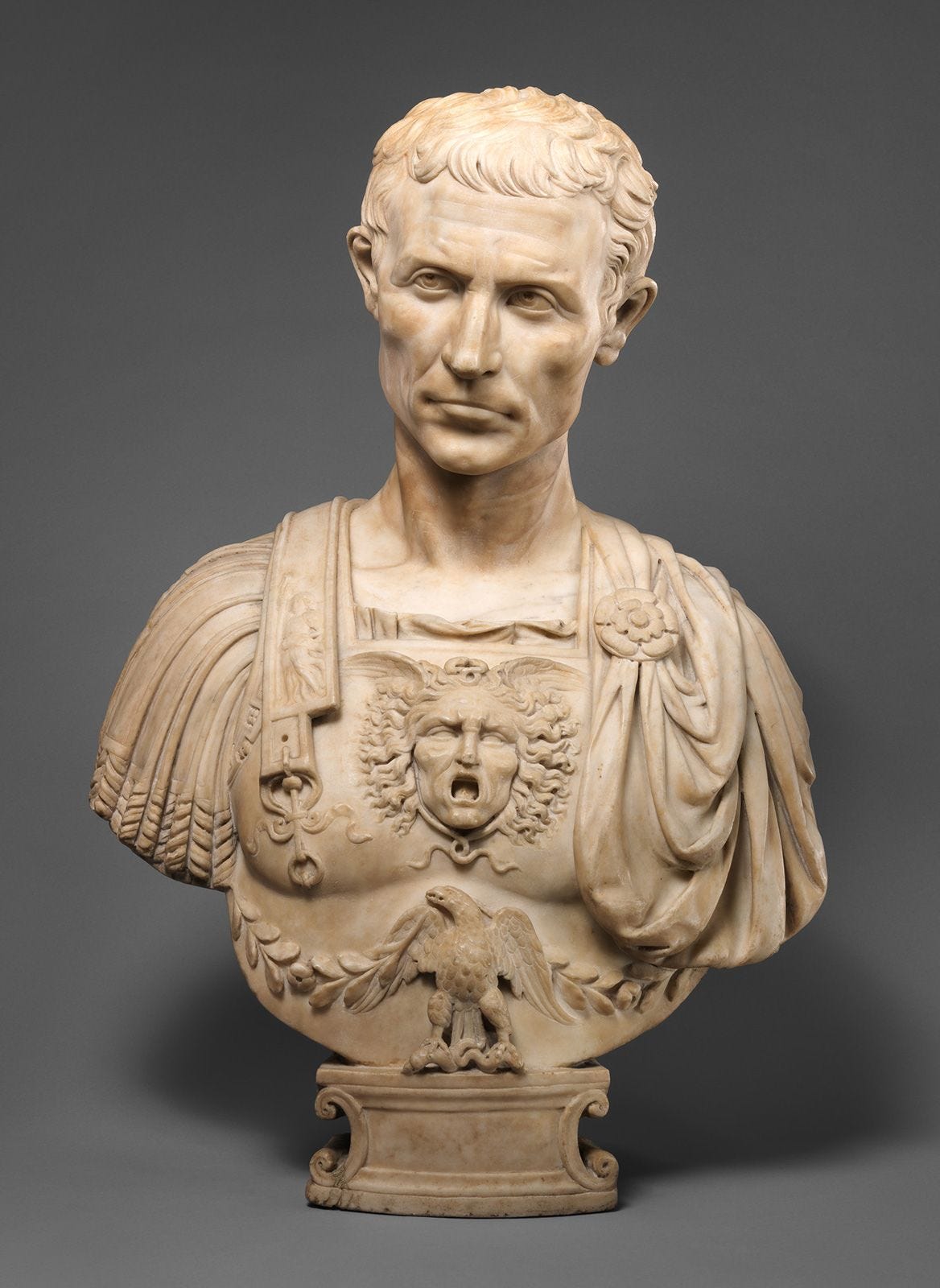
This theory presents several problems. It claims Great Men of history arise independently from their historical material conditions and embodied ideals in their actions and diversions of world history. However, class relations and economy—the material base—is overwhelmingly what creates the conditions for these men to act within their historical moments. Had Roman class contradictions between proletarii and poor plebeians and their patricians/rich plebeians not been at such a breaking point, Julius Caesar would not have been able to operate within his moment. Placing him hundreds of years before or after his specific historical moment, he would have been a nameless general upon history.
To be sure, subjects during ruptures and moments can act and exert their influences on wider society; however, these are entirely limited and borne out of their objects. They can only act within the limits of their objects (economy, class society, contradictions). And of course, these subjects act far beyond just individuals, as whole groups embody far more than one person. In response to Great Man of History theory, the Marxist theory of Personification stands as a much stronger alternative.
Personification
Marx said that:
As capitalist, he is only capital personified. His soul is the soul of capital.
Personification in this sense is wholly rooted in social material relations. Capitalists act on behalf of their machines of Money-Commodity-More money (M-C-M’’), acting as personifications of this endless accumulation. The actions within the subject then are wholly oriented, stemming from their relation with other men. A capitalist’s reproduction is derived from extracting surplus from his wage laborers; therefore, he promotes a hustle/grindset culture within his personal podcast.
Men can also personify the contradictions and class conflicts of the societies around them. For example, Julius Caesar was a symptom of deeper class struggles and contradictions of the Republic, not an independent actor. Caesar was born out of the widening wealth gaps felt by poorer plebeians in Roman society as their small farms were bought up by wealthy plebeians and patricians. These elites of Roman societies would then flood their farms with Rome’s newly captured slaves—a source of cheap labor that pushed out the poorer plebeians from the countryside, creating the landless proletarii that flooded cities. In this sense, to place Caesar as a dictator that acted independently of history, who just decided to end the Roman Republic, is asinine. Caesar only operated within his historical moment acting as a personification of roman class society, mostly the patricians and rich plebians, while also absorbing the conflicting anger of the masses in order to preserve the current order. The Roman Republic was ended by the Roman Republic’s own economic laws and the contradictions contained within them, not by a single man.
Donald Trump, in that same way, can be viewed as a personification of the contradictions within American society. As class conflict becomes emboldened between the dying neoliberal order—a proletariat that is continually seeing its welfare cut and industrial capital globalized into areas of the world with lower variable capital—and a falling rate of profit, in addition to a seemingly permanent portion of the population in the reserve army of labor, figures rise to the top within these vacuums that embody the needs of ruling apparatuses in mediating these conflicts. Trump, between his populist rhetoric and big beautiful bill, perfectly personifies the current moment of capitalist social relations: a society experiencing the absolute limits of accumulation and growth, a historical moment in which a figure is needed to mediate class conflict and preserve the current order.
Trump personifies the needs of his class—the capitalist class—and furthers its accumulation through mass cutting of welfare, imperial actions, and mass upset of the traditional orders that can no longer continue. However he also embodies the growing class conflict of the American proletariat which is continually becoming more exerted within the operations of capital. But this embodiment is only done within the confines of a bonapartist need to mediate the arising class conflicts and to preserve class society.
Trump is so many of capital’s mechanisms personified, accumulation, imperialism, that ever engorging beast of capital is given flesh and blood through him. And while Trump does act as an individual leader often surprising everyone with his rash decisions, said actions are borne entirely out of the material production that has produced him, and are done entirely within the confines of his historical material moment. Trump rose as a leader to the surface because the contradiction between proletariat and bourgeoisie, constant and variable capital, accumulation and finite resources, and so many more could no longer continue within their traditional way. However these are sandboxes that produce subjects, subjects are created by these sandboxes and act within them but can also choose different courses of actions.
Think of playing Grand Theft Auto, you can do whatever the game allows, some people end up choosing to steal, kill, and murder but you could also just be a boring law abiding citizen that ignores the main story at any time. What you can and cannot do is limited by the games code, your character is born out of it, but there is some control within the subject. In the real world the games code of course is the socioeconomic relations of society, and these can be smashed and transformed into something wholly new during times of ruptures by revolutionary subjects (eg. the working class). That is what is so special about our dialectical universe, this sandbox unlike in Grand Theft Auto is not permanent, it can rupture into something new due to the contradictions contained within it. Otherwise revolutions would never occur.
This subjective choice borne out of the object seems to be that Trump like so many Roman dictators and emperors has realized that senates as institutions don’t need to be listened to. This of course is entirely embedded in American class societies’ continual decline due to a falling rate of profit and accumulation apparatus at it’s very edges of extraction. The object creates the subject, the subject then influences the object within the confines set by the object, had Trump attempted this during a more stable period of capital he would’ve been likely ousted. But this Augustus won’t see a Pax Americana.
The question then arises, is Marxism deterministic? And the answer is clear, Marxism is relatively deterministic. Marxism acknowledges that class society and capital will inevitably produce many opportunities and crises for it’s overthrow, but said chances have to be taken by the conscious activity of classes. Whether working class or ruling. That crises will appear is inevitable, but how it is responded to by subjects is not. And of course liberal hopes of reforming or subduing crises will always fail to permanently end them.
Finally of course just off of camera are the millions of people who create these conditions. To relegate any movement to an individual and not the millions within class society that embody them, enact them, and make them happen is a fools errand. Sure some historical figures can become intellectuals, and leaders, but no action truly happens without the millions of others involved within it’s production.
What personification does is take these figures of history and puts them within the socioeconomic moments that produced them. A landlord personifies his specific role as expropriator of land, a capitalists as his specific role of expropriator of labor. It flips great man of history theory on it’s head, recognizing that said ‘great men’ were personifications of the contradictions, social mechanisms of control like capital, and material conditions of the society around them, not independent vacuumous actors endowed with some god ordained essence.
Works Cited
Marx, K. (1995). Capital: A critical analysis of capitalist production: Vol 1. Chapter ten: The working day (S. Moore & E. Aveling, Trans.). Marxists Internet Archive. https://www.marxists.org/archive/marx/works/1867-c1/ch10.htm (Original work published 1867)
Wikipedia contributors. (2024, March 11). Great man theory. In Wikipedia, The Free Encyclopedia. https://en.wikipedia.org/wiki/Great_man_theory